

Is there a perfect age or time to invest in farmland? The answer is yes and no—yes, because now is the ideal time, and no, because any age is the right age to invest. Farmland is a timeless investment, accessible to everyone. Whether you’re young, middle-aged, or retired, it holds value throughout life. For the young, it can serve as a weekend escape, a rental property, or a space for hosting. For those in their middle years, it could become a family home, a spot for organic farming, or a peaceful retreat. For retirees, it offers a chance to embrace farming or enjoy a healthier, quieter life away from urban chaos.
However, the timing couldn’t be more perfect right now. The farmland market has transformed in recent years, driven by government initiatives and growing demand. With demand now surpassing supply, this moment presents a prime opportunity to invest.
1. Economic Growth and Rising Food Demand
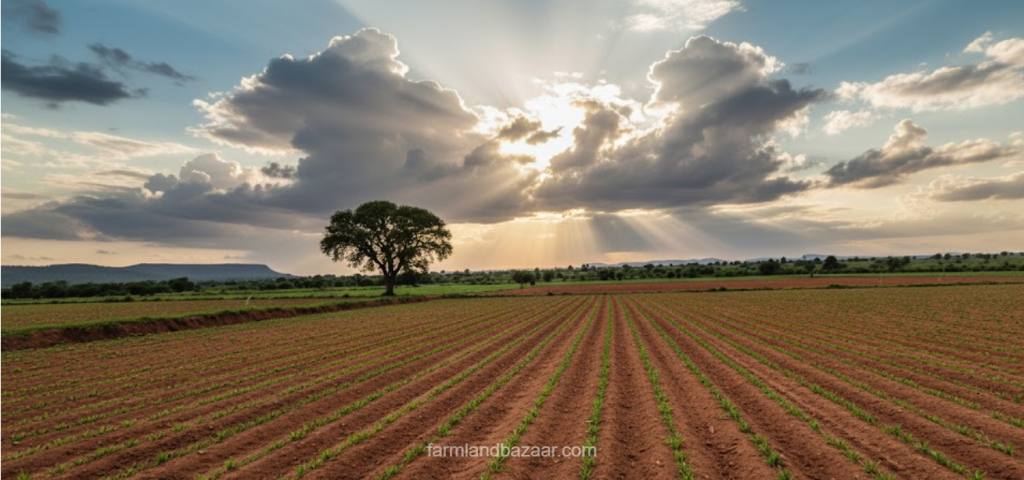
India’s economy is one of the fastest-growing in the world, projected to grow at approximately 6-7% annually. This growth is primarily driven by rapid urbanization and increasing disposable incomes. As more individuals migrate from rural to urban areas, the demand for food—especially fresh and high-quality produce—has surged significantly. This is not just a short-term trend; according to the Food and Agriculture Organization (FAO), food demand in India is expected to increase by 70% by 2050. This rising demand creates a robust market for agricultural products, which in turn makes farmland a highly attractive investment.
For investors, this presents a dual benefit:
● Appreciation in land value: As cities expand and the rural-urban divide blurs, farmlands near urban centers experience rapid appreciation in value.
● Income generation: Farmland can generate continuous income through farming activities, rental, or leasing to other farmers or businesses. The demand for organic, sustainable farming has opened new revenue streams for landowners.
2. Government Support and Initiatives
The Indian government is actively supporting the agricultural sector through various initiatives designed to promote economic stability and growth. One such initiative, the Pradhan Mantri Kisan Samman Nidhi (PM-KISAN) scheme, provides financial assistance to farmers, ensuring their livelihoods remain stable. As of December 2023, the program has disbursed over ₹2.26 lakh crore ($27 billion), directly benefiting more than 100 million farmers. This kind of economic support enhances the security of the agricultural sector, making farmland investments less risky and more appealing to newcomers.
Additionally, digital platforms like eNAM (National Agriculture Market) have transformed the way agricultural produce is sold. By allowing farmers to sell their products directly to buyers, eNAM eliminates intermediaries, thus ensuring fair pricing. Apart from these farmer and farming
benefits, the government promotes investment in farmlands. In Karnataka, for instance, the 2020 Land Reforms Act removed restrictions on non-farmers owning agricultural land. The law also increased the ceiling on land ownership from 10 to 20 units, allowing individuals to purchase up to 108 acres of dry land.
This ease of access and transparent marketplace not only benefits farmers but also makes agriculture a more appealing option for investors looking for a reliable, income-generating asset.
3. Diversification and Risk Management
For investors looking to diversify their portfolios, farmland offers a unique and attractive option. While real estate markets can often be volatile, agricultural land typically retains its value and appreciates over time. According to a report by Knight Frank, farmland prices in India have seen steady growth rates of 5-10% per annum over the last decade. This makes farmland a dependable hedge against inflation and market downturns.
Farmland investments offer both short- and long-term gains. Younger investors can lay a solid financial foundation by investing in smaller plots and growing their portfolios over time. Meanwhile, older investors can secure their legacies by acquiring larger agricultural properties that can be passed on to future generations or sold for significant profit as land values continue to rise.
4. Sustainability and the Rise of Organic Farming
The global push towards sustainability is profoundly impacting agriculture, with organic farming gaining significant traction in India. The organic food market in India is expected to reach $1.36 billion by 2025, driven by consumer demand for healthier and eco-friendly food options. Investors in farmland can capitalize on this growing trend by purchasing land that is suitable for organic farming. Land dedicated to organic agriculture often commands higher market prices due to the premium associated with organic produce.
Beyond financial gains, investing in organic farming contributes positively to the environment by promoting sustainable practices. As Rajendra Singh, a renowned water conservationist also known as “Waterman of India”, once tweeted, “Investing in organic farming is investing in a sustainable future for our children.” Farmland investments are not just about earning profits—they also allow investors to play a role in building a sustainable, environmentally-friendly future.
5. Technological Advancements Transforming Farming
Technological innovations are revolutionizing agriculture, enhancing efficiency and productivity. Advances in irrigation systems, precision farming, and crop management enable even small plots of land to yield substantial profits. The global precision agriculture market is expected to reach $12.9 billion by 2027, growing at a CAGR of 12.2% . Investors can leverage these technologies to maximize their returns, regardless of their prior agricultural experience.
6. Long-Term Appreciation and Urbanization Trends
Farmland tends to appreciate over time, particularly in proximity to expanding urban areas. As cities grow, the value of agricultural land nearby can see significant increases. For example, in regions surrounding cities like Bangalore and Hyderabad, farmland values have escalated by nearly 20% in recent years due to urban sprawl . This trend makes investing in farmland a wise long-term strategy, as investors can reap the benefits of rising land values.
7. Accessibility for All Ages
One of the most compelling aspects of farmland investment is its accessibility to all age groups. Young professionals, for instance, can start small, investing in manageable plots that serve as weekend getaways, rental properties, or even organic farming ventures. For retirees, larger tracts of farmland offer opportunities for estate planning, organic farming, or simply a peaceful retreat from urban life.
Farmland also offers flexibility in how it is used. For some, it might serve as a secondary source of income, while for others it could become a primary residence or a new career in sustainable agriculture. The diverse options available make farmland investment appealing to both beginners and seasoned investors alike.
So Why Now?
The convergence of economic growth, increasing food demand, strong government support, sustainability trends, and technological advancements makes investing in farmland a timely opportunity. With demand for agricultural products growing, supported by robust initiatives and rising land values, farmland offers a solid and profitable investment.
And How?
For anyone looking to buy farmlands, FarmlandBazaar is a reliable platform to explore available farmland options, filter choices based on budget, and find properties that meet your investment goals. However, it is always recommended to visit at least two or three properties for physical verification before making any investment.
Now is the time to capitalize on these trends, before the supply dwindles further and prices rise even higher. Investing in farmland today is not only a smart financial move but also a way to contribute to sustainable development and secure a legacy for future generations.