
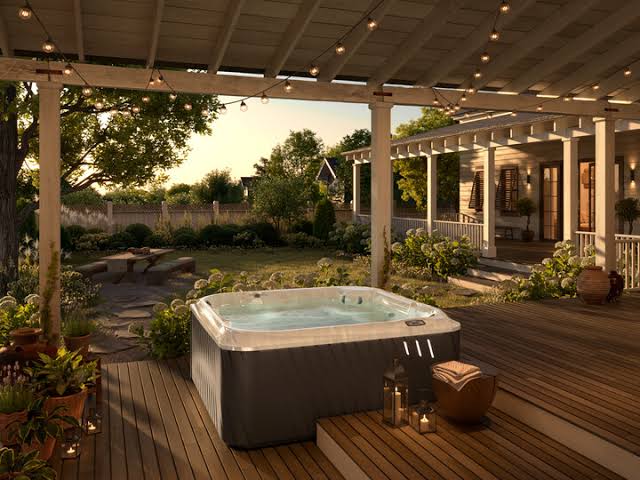
Use a pool project gallery to identify ideas, rather than treating a finished photograph as a specification for your own backyard. Name the relationship that appeals to you, look for other views and record what the image cannot explain. This turns inspiration into a useful conversation with a designer instead of a request to copy a property with unknown conditions.
Jameson Pool & Spa’s project gallery groups examples into large, medium and compact backyards. Those groupings can help organize an initial search. They do not establish that a pictured design will fit another property, so bring selected images into a site-specific discussion rather than using the category name as a measurement.
Name the relationship that caught your attention
Pause before saving the next attractive image and explain why you like it. Perhaps the dining area faces the pool without feeling crowded, or the planting softens a long edge. Perhaps the water is visible from the house while the equipment is less prominent. These are relationships a designer can discuss even when the exact materials or dimensions are unknown.
A preference such as I like this colour is valid, but it may not capture the whole attraction. Look at the surrounding surfaces and the composition. The same colour can appear different beside another house or patio. Separate the material preference from the arrangement so the design brief does not lose a useful spatial idea when a finish changes.
Distinguish an activity you want from an object you admire. A photograph of a large sunledge might appeal because people seem comfortable gathering there. Explain the desire for that kind of use to the designer. The appropriate response for your pool could differ from the pictured feature, depending on the site and the household’s other priorities.
Write a short annotation while the reaction is fresh. One sentence beside an image is enough: the seating feels connected, or the pool edge leaves a generous garden view. Without that note, a later collection of saved photographs can become hard to interpret. The designer cannot know which of many visible elements prompted the selection.
Look for another view of the same project
A second angle can reveal a relationship hidden by the first. A patio that appears broad in one view may have a very different shape beyond the frame. Look for additional images of the same project where they are available and clearly identified. Do not assume that neighbouring gallery photographs show the same property unless the presentation confirms it.
Notice what is absent from the image. The house entrance, service area or construction access route may be outside the frame. Their absence does not mean the completed project lacks them. It means the photograph cannot answer those questions. Keep the unknowns visible rather than filling them with the arrangement most convenient to your preferred design.
Perspective affects how a space reads in a photograph. Avoid deriving dimensions by comparing a pool edge with furniture that may not have a familiar scale. Ask for relevant project information if the publisher or builder makes it available, and have the designer assess your own property independently. A visual impression is not a reliable measurement method.
Look for ordinary use clues without inventing a story about the owners. A table and seating arrangement can suggest a possible activity, but they do not prove how often the household uses it. Describe what you would like to do in a similar setting. This keeps the brief centred on your needs instead of assumptions about someone else’s life.
Translate the photograph into a request about your property
Pair each selected image with a photograph of the relevant part of your yard. If the inspiration concerns the view from a kitchen, show the designer your kitchen’s outlook. If it concerns the relationship between a patio and planting, identify the existing garden areas you want to preserve. The comparison becomes grounded in the property being designed.
Tell the designer what is flexible. You may like the calm arrangement but have no attachment to the pictured pool shape. You may want a similar material relationship while keeping the existing patio. This distinction lets the professional develop an appropriate interpretation, rather than spending the consultation explaining why an exact reproduction is unsuitable. If a specific product matters, ask whether it can be identified and is currently available; a completed project photograph does not establish either fact.
Ask which aspects of the inspiration depend on information the photograph does not show. Site levels, technical requirements and the location of existing structures may affect what can be achieved. A useful consultation makes those dependencies understandable. It should leave the owner with a clearer brief, even when the most attractive image leads to a different proposal.
Build a small brief with useful disagreements
Select a manageable group of images instead of sending an unfiltered collection. Include different ideas when they reveal a real household preference to resolve. Two contradictory examples can be useful if the notes explain the disagreement, such as one person preferring a formal edge and another wanting a softer relationship with the garden.
Add one example of something you would avoid, expressed neutrally. Perhaps a seating arrangement feels too isolated, or a feature occupies more attention than you want. The purpose is not to criticize another project. It is to help the designer understand your priorities through a concrete visual reference.
Bring the annotated image that best captures your main wish, together with the question it leaves unanswered. A note such as we like how this patio relates to the water, but do not know how much space it needs gives the designer an honest starting point. That is far more useful than asking for the photograph itself.